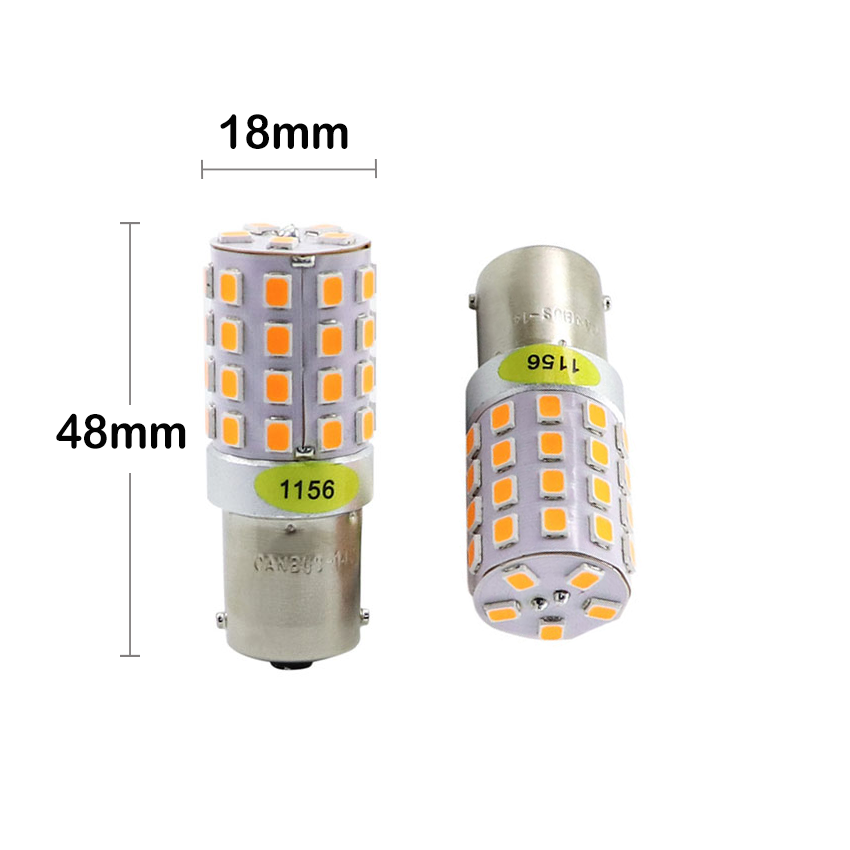
This lamp features an aluminum heat sink and a design similar to traditional halogen lamps, with a 360-degree luminous wick. It also has a glass shade and is IP66 waterproof.
It offers sufficient power without false claims. It's available in multiple voltage ranges.
It utilizes a constant-current IC power supply with a wide-voltage drive design and is CE and RHOS certified.
T20 / 7443 Connector
● Connector Type: This is a standard wedge-shaped base, belonging to the same family as the more common T10 and T15 bulbs, but larger. Its connector is identical to that of a 7440 bulb.
● Name Meaning:
1. T20: The "T" represents the approximately 20mm diameter of the bulb's glass portion.
2. 7443: This is a model code commonly used in North America, specifically designating a dual-function, dual-filament (or equivalent LED circuit) bulb for brake/taillight or DRL/turn signal integration.
● Operating Voltage: The "12VDC" marked in the image indicates a standard operating voltage of 12V DC, suitable for all passenger vehicles.
Core Function: Dual Color and Dual Mode
This bulb's most critical feature is:
● Dual-Color Output: The bulb integrates two colors of LED chips.
- Cool White: Used for the Daytime Running Light (DRL) function, constantly illuminated during daily driving, enhancing daytime visibility and safety.
- Amber/Yellow: Used for the Turn Signal function, flashing when the turn signal is engaged to provide a warning.
● Working Principle: Based on the current signal provided by the vehicle, the intelligent circuitry within the bulb automatically switches the illuminated LED chipset, achieving two-color switching.
Main Applications
This bulb is designed for the following vehicle lighting locations:
● Integrated DRL/Turn Signal position within the headlight assembly: This is the most important and appropriate application. It replaces two separate factory-installed bulbs (such as a 7440 turn signal and a separate DRL) with a single bulb, achieving functional integration.
● Some modern models have integrated front width and turn signal lamps.
Product Advantages and Installation Notes
Major Advantages:
● Functional Integration: One lamp serves two purposes, simplifying wiring and making upgrades easy.
● Extreme Aesthetics: The white daytime running lights significantly enhance the vehicle's technological and aesthetic appeal.
● Improved Safety: The LEDs illuminate instantly and respond extremely quickly, providing other road users with more time to react.
Key Installation Tips:
Confirm the connector! : Be sure to remove the original vehicle bulb for verification. Your vehicle's lamp socket must be a T20 (7443) connector. This is completely different from the smaller T10 and T15 connectors.
2. Confirm the original vehicle's functionality: Your vehicle must have a headlight that has both DRL and turn signal functions.
If the original vehicle's two functions are separate (implemented by two separate bulbs), you cannot upgrade with this single bulb.
3. CANBUS Compatibility: While not explicitly labeled in the image, LED bulbs with complex functions typically have a built-in decoder to prevent errors in the vehicle's computer. However, to be on the safe side,
be sure to test both functions after installation to ensure they are functioning properly and that there are no fault indications on the instrument panel. If flickering or errors occur, a decoder may be required.
This high-end, multifunctional T20/7443 dual-color LED bulb upgrades your vehicle's front turn signals to an integrated lighting system with both white daytime running lights and amber turn signals,
significantly enhancing your vehicle's appearance and driving safety. Before installation, please ensure that the lamp socket interface and lamp position match your vehicle's functionality.
Application:
Usage: For use on tail lights, brake lights, reverse lights, turn signals, side marker lights, tail lights, brake lights, backup lights and interior bulbs on cars, trucks, SUVs, vans, scooters and recreational vehicles on trailers. Recreational vehicles, boats, mariners, etc.